Ragdoll cat breed
Ragdoll cats are loved around the world for their affection and playfulness. If you have a Ragdoll cat, or are thinking of purchasing one, you can learn more about the breed below. We’ll cover everything from the size of Ragdoll cats to the average lifespan of your Ragdoll.
Pet insurance provided by Pinnacle Insurance Ltd.
Information on how we collect and use your personal data is available to read in our Privacy Policy
Ragdoll cat breed information and advice
The Ragdoll cat was first bred in California in the 1960s by Ann Baker, an American breeder. Ann crossed a white Angora-like queen with several neighbourhood toms. The resulting kittens were placid and affectionate. They also tended to go limp or became completely relaxed when picked up, just like a rag doll.
The Ragdoll breed was first imported into the UK in 1981 and has since become really popular. These large and beautiful Ragdoll cats come in a range of colours and have a docile, friendly and easy-going nature. They'll get on with everyone and make great companions for all households.
Insurance for your Ragdoll
Although the Ragdoll is generally a healthy cat breed, you should still protect your cat or kitten with pet insurance. If your cat is diagnosed with an illness, Ragdoll cat insurance may help cover the cost of vet bills.
Ragdoll cat insurance can help cover the cost of your cat’s treatment, including any medication, vet prescribed complementary treatment or surgery.
Ragdolls can sometimes have higher insurance costs compared to other cats. Explore the common health conditions found in Ragdolls:
How to care for a Ragdoll
Ragdoll cats need regular grooming but are easy to look after. They’re happy to be fussed over, so feel free to pick up your Ragdoll cat and check they’re doing ok. Make sure that they have a balanced diet and lots of exercise to keep them in tip-top condition.
Feeding and nutrition
Ragdoll cats can take up to 4 years to become fully mature. Feed them a cat food that matches their age, size, activity level and any specific health conditions. Your breeder should tell you when and how often to feed them. Ideally, use the same cat food to avoid any tummy upsets. Like many cats, Ragdolls like a routine so try to feed them at the same time every day.
They do love their food, so make sure they stay at a healthy weight by keeping to the guidelines on the food packaging. If in doubt, your vet will be happy to give you advice on the best food and how often to feed your Ragdoll.
Grooming
Regularly grooming your Ragdoll twice a week with a cat comb will help prevent their coat from becoming knotted. As they enjoy spending time with their owners, they’ll love sharing grooming time together. Remember they’ll shed more often in spring and autumn.
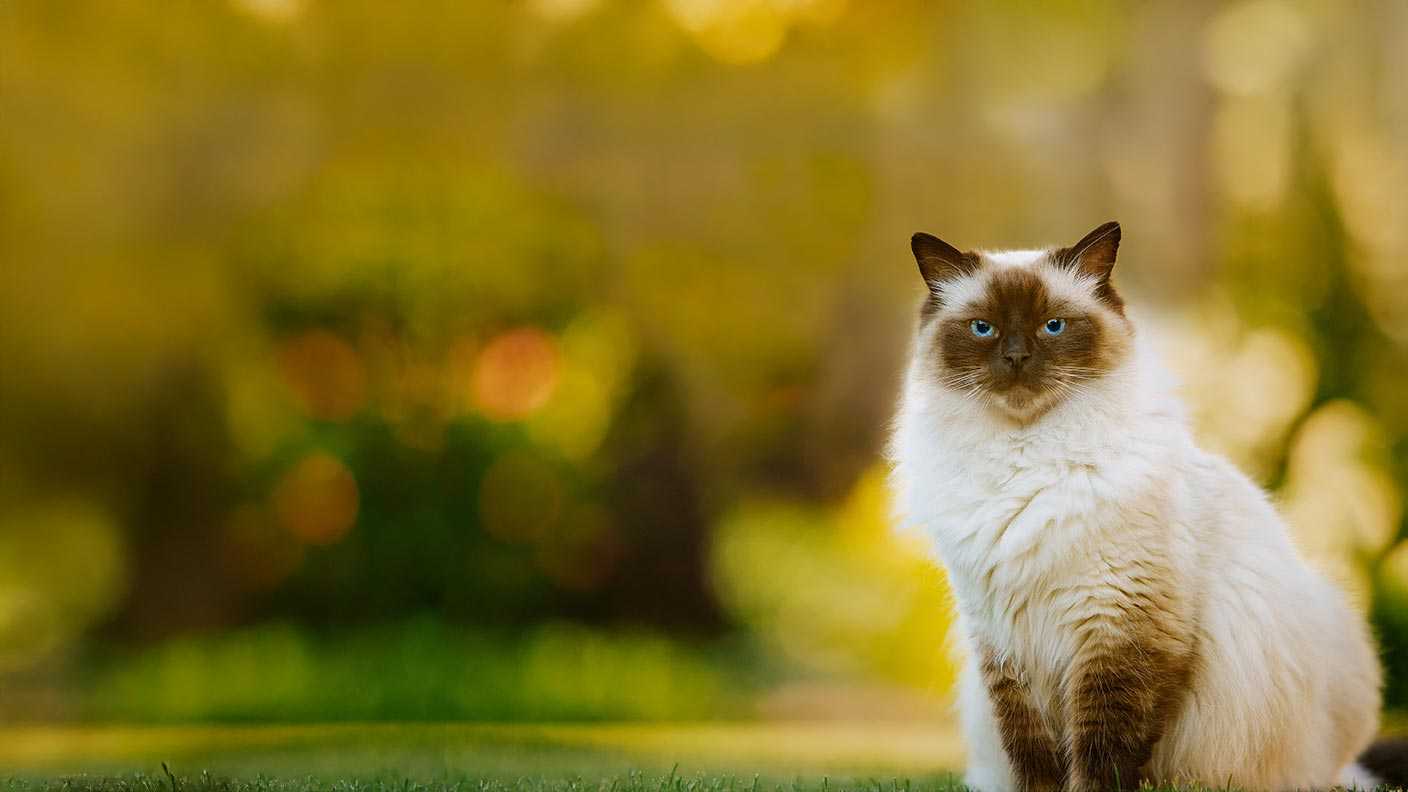
The Ragdoll breed are well known for their semi-long, silky coat and large blue eyes. They’re a ‘pointed’ breed which means they have a pale body with darker markings on the face, ears, tail or legs. Their coat comes in six colours: seal, blue, chocolate, lilac, red and cream – and can be tortoiseshell or tabby patterned. There are also three pattern variations – colourpoint, bi-colour and mitted.
Colourpoint Ragdolls have similar markings as a Siamese cat with traces of white on their bodies. Mitted Ragdoll cats have white feet and white on their back legs - and some also have a white blaze and a white tip to their tails. Bi-colour Ragdolls have more white in their coats, which can extend up their legs. They can also have a splash of white on their backs and undersides and an inverted white ‘V’ on their faces with a white tip to their tails.
Exercise
Ragdolls are usually easy to toilet train as they respond well to positive reinforcement. Give them a treat every time they use the litter box, and they will soon learn. You can also try training your Ragdoll to play ‘fetch’.
Training
Ragdolls are usually easy to toilet train as they respond well to positive reinforcement. Give them a treat every time they use the litter box, and they will soon learn. You can also try training them to play ‘fetch’.
Temperament and behaviour
A Ragdoll cat is playful but not too demanding. They are affectionate, laid-back, calm and sociable – characteristics that make them perfect companions. They’ll get on with everyone, including other dogs and cats in the household. The Ragdoll breed is known for being devoted to their owners, they have been nicknamed ‘puppy cats’.
Ragdolls are usually quiet and not particularly talkative. However, they can be vocal when interacting with their owner and they might meow or chatter when hungry or want attention.
An interesting quirk of a Ragdoll’s personality is their love for water – they’re fascinated with it. Whether it’s a running tap or a bath, you may very well find your cat already there. This will make bathing your cat easier, but as they’re naturally clean cats, they won’t need to be washed too often.
What is a Ragdoll cat?
A Ragdoll is a large cat with a colour pointed coat and large blue eyes, known for having a placid and affectionate nature. The breed was developed in the US in the 1960s and came to the UK in the 1980s.
How long do Ragdoll cats live?
The average lifespan of a Ragdoll is between 14 and 15 years, but some can live up to 20 years if well cared for. It takes up to 4 years for Ragdolls to become fully mature adults.
How much is a Ragdoll cat?
You can expect to pay anything from £400 to £1,000 for a Ragdoll kitten. The cost depends on the breeder and breeding line. The price might also be higher if the Ragdoll has a rare or unusual eye colour or coat pattern. They are quite rare and in-demand, which is another reason why they can be quite expensive.
Can Ragdoll cats go outside?
Ragdolls love to explore outdoors and are very trusting - which can expose them to danger from other cats and dogs. Their high value can also put them at risk of being stolen.
Fortunately, they adapt well to being kept as indoor cats if they have company and lots of cat toys to keep them occupied. They’ll also need places where they can curl up for a cat nap.
So, is a Ragdoll right for you?
Ragdolls can make great companions for elderly owners, single people working from home and families with children. They enjoy company and interaction and will get along with any other pets you might have. They don’t like being left alone, so it would be good to consider getting a feline companion if you’re out at work all day. Ragdolls love cuddles and are happy to be a lap cat.
Frequently asked questions
Is a Ragdoll a good family cat?
Ragdoll cats make great family pets, their friendliness, playfulness and loyalty mean they’ll happily spend time with kids both young and old. If your children enjoy picking up their pets the Ragdoll is happy to be held. However, like all cats, they might not enjoy particularly heavy-handed toddlers or young children so be sure to keep an eye on all interactions.
How long do Ragdolls live?
Ragdolls live between an average of 12 – 15 years, though plenty have been known to live a lot longer. Things such as regular vet visits, getting enough exercise and eating healthily will all have long term effects on the life of your cat. Look out for common complications to try and nip any health issues in the bud.
Do Ragdolls make a lot of noise?
The amount of noise your Ragdoll cat makes can vary. Some people report having incredibly vocal Ragdolls while others say their cats are typically quiet. If your cat is going to chatter it’s likely going to occur around feeding time, or when they’re most excited.